Foxes are magical. Growing up, I only saw them on Christmas cards, with thick red coats, poised and vibrant against a snowy backdrop…or popping up to chuckle “boom boom!” on TV after school. Then I moved to Britain.
My first introduction to a real-life fox was a chilling scream outside my window sometime after midnight. Less Smeaky and Lox and more the Mighty Boosh’s Crack Fox. But nearly a decade on, I still get excited when I see one scampering through a carpark or fleeing a rubbish-strewn curbside crime scene. I will never see them as vermin.
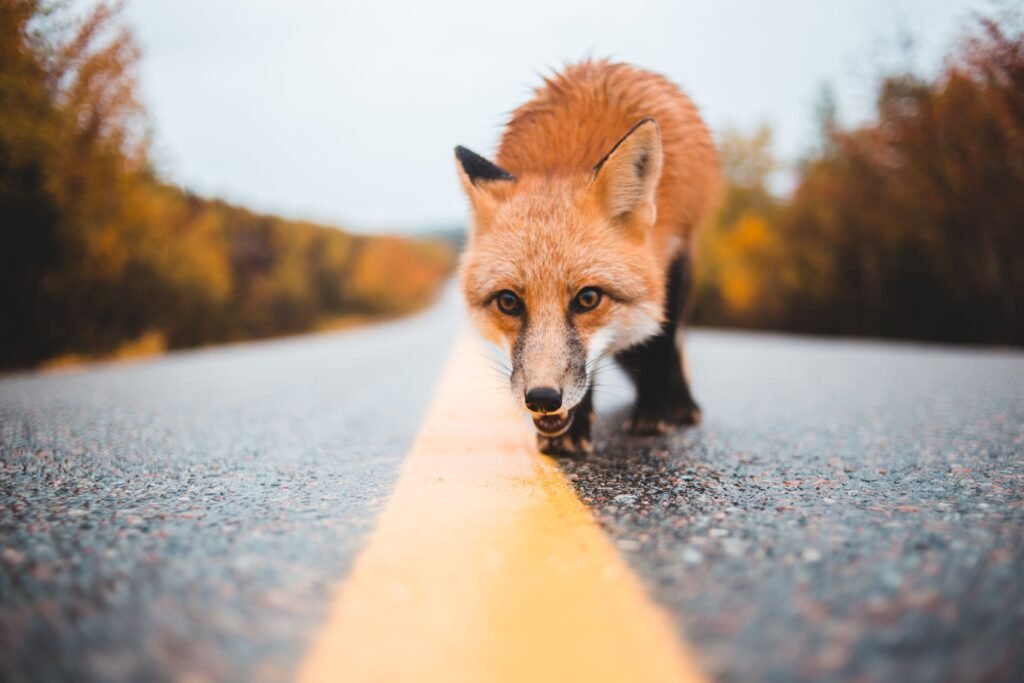
There are more foxes around than ever this time of year, and we have some adorable cubs that have started venturing into our council estate to play. As I watched them tussle, I noted how fluffy and red they were, compared to dusty gray of their parents. It reminded me of a holiday in the countryside, where I once spotted a majestic, tall, muscular fox standing under a tree, coat blowing in the breeze. The Christmas card edition. The size difference stunned me – surely foxes in the city get more food, no? Why, just an hour out of town, are they SO different?
Foxes give us a rare opportunity to see what happens when the same species lives in two completely different worlds just a few miles apart. I am curious to learn how urban and rural foxes have started differing over the years. As it turns out, this involves far more than appearance. Urban foxes are helping scientists understand how modern cities affect wildlife, and their story reveals a lot about the choices we make as humans.
The fox: one of the world’s great survivors
There are around 37 recognised species of fox worldwide, ranging from the tiny fennec fox of the Sahara Desert to the Arctic fox of the far north. The species most familiar to people in Britain is the red fox (Vulpes vulpes), which is also the most widely-distributed wild carnivore on Earth. That said, foxes are technically omnivores. Their diet can include rabbits, mice, voles, insects, birds, worms, berries and fruit. They belong to the dog family Canidae and are highly adaptable generalists, capable of changing what they eat depending on where they live.
Foxes usually live in family groups centered around a breeding pair. Cubs are typically born in spring, usually March or April, and emerge from the den a few weeks later. In Britain, the red fox is found almost everywhere, from farmland and woodland to suburbs and city centres. In fact, British foxes are regarded as some of the world’s most successful urban fox populations.
Foxes have lived in Britain for thousands of years, but their relationship with humans has changed dramatically. Historically, they were primarily rural animals. During the twentieth century, however, increasing urbanisation allowed foxes to colonise towns and cities, particularly after the Second World War. Today they are a familiar sight in cities such as Bournemouth, London, Bristol, Brighton and Newcastle, which have the highest urban fox populations per square kilometer.
Modern fox populations are now considered stable across much of Britain, although local declines can occur due to disease, habitat changes and wildlife management practices. The legal landscape has changed too. Traditional hunting with dogs became illegal in England and Wales under the Hunting Act 2004, although foxes may still be controlled through legal shooting and other wildlife management methods. Overall, Britain has always had a soft spot for foxes – from Basil Brush to Roald Dahl’s Fantastic Mr Fox – even while arguing about how to manage them.
Same animal, different lives
While technically the same breed, several differences have started occurring between countryside red foxes and their urban cousins.
Country foxes typically rely more heavily on natural prey such as rabbits, rodents, insects and seasonal fruits. Their territories can be enormous because food is spread out across the landscape. In upland areas, territories may reach around 40 square kilometers. For urban foxes, food is concentrated and predictable so they can survive in much smaller territories, sometimes just a couple of blocks. This means they wind up living at higher population densities than their rural counterparts. Research tracking foxes in British cities found that gardens, allotments and patches of rough ground are especially important habitats.
Urban foxes eat a more varied and human-influenced diet. While they still hunt rodents, birds and invertebrates, they also consume discarded food and food intentionally provided by people. Compost heaps are actually a valuable and somewhat healthy food source for them, but unfortunately these are not hugely common in the city, so many resort to raiding your rubbish bins. More food should mean healthier foxes, right? Not necessarily.
Many urban foxes appear thinner, patchier or less healthy because they face hazards that rural foxes rarely encounter. Traffic is one of the biggest threats. According to the RSPCA, road accidents account for nearly 60% of fox deaths, with an estimated 100,000 foxes killed on UK roads every year. Urban foxes are also more likely to encounter litter, fencing, netting, toxic substances and other human-created dangers. Mange, a skin disease caused by mites, can make foxes appear thin, scruffy and almost hairless. Outbreaks of mange have contributed to population declines in some areas.
Lifespan tells an interesting story too. Foxes in the countryside can live for many years, with exceptional individuals reaching over a decade. However, average life expectancy in the cities is often only a few years because of disease, accidents and competition. This also means they may overtime also differ in average size. Behaviour changes as well. Rural foxes tend to be more wary of humans. Urban foxes often become habituated, meaning they lose much of their fear and tolerate close human presence.
What are humans doing to foxes?
Urban foxes are effectively participating in a giant experiment. They are one of the few larger wild animals that spends their whole life in environments shaped almost entirely by people.
Researchers studying urban foxes have found that the structure of gardens and green spaces strongly influences how foxes move through cities. Connectivity matters. Foxes depend on networks of gardens, vegetation and open spaces that allow them to travel safely. Our article on the importance of urban forests touched on this. As cities expand, natural habitats become fragmented. Large roads, dense housing developments and impermeable fencing can cut off traditional routes. This forces foxes into smaller spaces and increases their exposure to traffic and conflict with humans.
Scientists increasingly view urban foxes as indicators of wider environmental health. If a highly-adaptable species such as the fox struggles to navigate modern cities safely, less adaptable species may face even greater challenges. When we see an urban fox with a damaged tail, patchy fur or signs of injury, we are often seeing the visible consequences of living in a human-dominated landscape, that may apply more subtly to other creatures too.
How can we help urban foxes?
The good news is that relatively small changes can make a significant difference. One of the most effective actions is creating connected wildlife-friendly spaces. Foxes move most successfully through landscapes that contain gardens, shrubs, trees, allotments and green corridors.
If you’re replacing a garden boundary, consider whether a hedge might work instead of a solid fence. Hedges provide shelter, support insects and birds, and help wildlife move through neighbourhoods. Keeping small gaps at the base of fences can also create safe routes for foxes and other wildlife. This principle is already widely promoted for hedgehog conservation and benefits many species.
Urban forests, street trees and connected green corridors are equally important. They don’t just make cities more attractive for people; they help wildlife move between feeding and breeding areas. Dog owners can help too. During spring, when foxes are raising cubs, keeping dogs under control and on-leash in green spaces can reduce unnecessary disturbance.
Should you feed foxes?
This is one of the most debated questions in British wildlife conservation.
Official advice generally says foxes do not need feeding because they are highly capable of finding food themselves. It can also create pest problems and breed disease. However, providing clean water during heatwaves is widely regarded as a sensible and humane way to support wildlife. Shallow dishes of fresh water can benefit foxes, birds, hedgehogs and many other animals.
Feeding foxes is not illegal. If you do choose to feed them then only do it very occasionally and in different locations. Avoid processed human food, heavily salted foods, cooked bones, milk and dairy or anything spoiled. Wildlife organisations generally recommend sticking to foods closer to a fox’s natural diet, such as unsalted meat-based foods or suitable dog food. After heavy snow dumps during winter, one of my neighbours puts out a small tray filled with hot water in the evenings, to offer them un-frozen overnight hydration, and she also tosses some raw chicken and cracks a few raw eggs into it for nutrition. My dog once found it on a late-night walk and thought he won the jackpot. So I’d also recommend you place it somewhere less public than a dog park!
The key with any feeding is moderation. The biggest concern is actually not dependency – research and wildlife experts generally agree that foxes remain capable hunters. The greater risk is habituation. Foxes that become overly comfortable around humans or see them as being providers may become more vulnerable to conflict, injury or persecution – be that from humans or from other foxes who want to muscle in on the free food from those tightly-packed neighbouring territories. You may inadvertantly find yourself becoming the reason for a turf war that threatens the home and wellbeing of your furry friend.
For most people, the best approach is to focus on habitat rather than handouts. Plant native shrubs or berry bushes (they’ll eat most of the same ones you do). Leave some wild corners in the garden. Reduce pesticide use. Create shade and water sources during extreme weather. These actions support entire ecosystems, not just foxes.
Conclusion: wild, not tame
Foxes can seem almost dog-like at times. They are intelligent, curious and surprisingly charismatic, but they do not make good pets. They remain wild animals with complex behavioural and social needs that cannot easily be met in domestic environments. Their welfare is best served in the wild, where they can hunt, roam, raise cubs and behave naturally – but that doesn’t mean we should ignore them.
Urban foxes are living alongside us because our towns and cities have expanded into landscapes they once occupied. Their scruffier appearance is often a reflection of the challenges of modern urban life, rather than any “failure” on their part.
By making our neighbourhoods greener, safer and more connected, we can help ensure that future generations continue to catch sight of a red tail disappearing through the hedge. In my opinion, British cities would feel a little less magical without them.