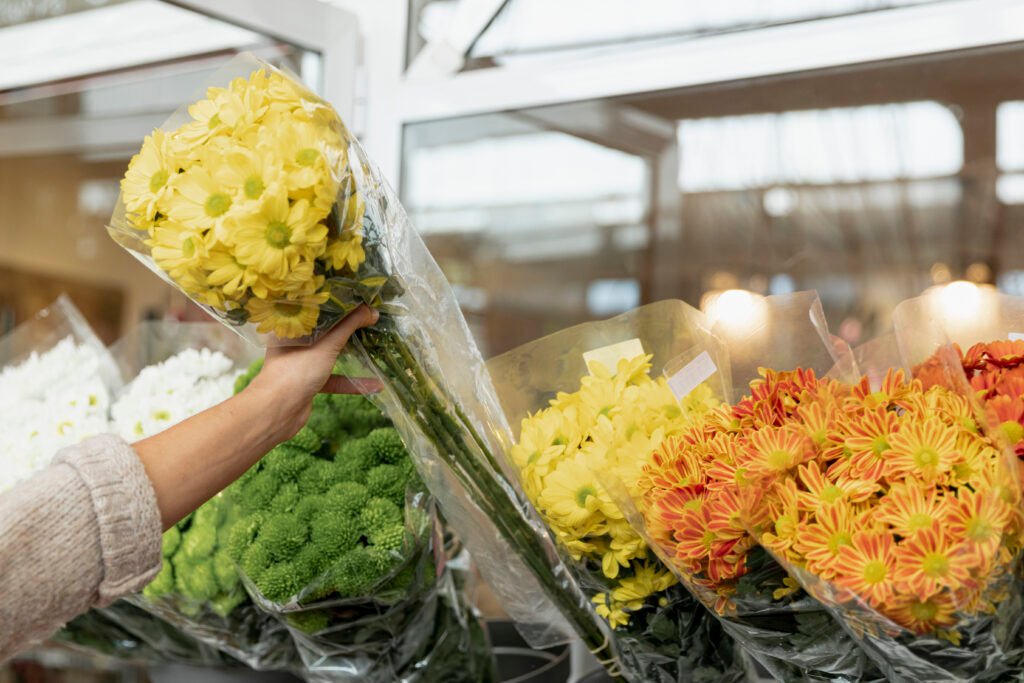
Flowers are a universal go-to gift idea for all occasions. They’re natural, biodegradable, smell good, brighten up a room, come in all sizes and can be thoughtfully matched to the receiver’s specific style. So surely buying a bunch of fresh flowers is an environmentally friendly choice, right? Well… not always.
Full disclosure, this article started out differently. I’d been buying flowers a lot, for a calendar full of summer weddings, birthdays, house warmings, baby showers, and – as a new West End season starts in London – oodles of opening nights. I was curious about why there are different price points for seemingly the same flowers and if the quality actually differed (might still write that article). I had never doubted I was making a green choice. However, the research for that piece stunned me. Turns out, by the time they land in your vase, most bouquets have a surprisingly large environmental footprint.
My aim is not to make you (or me) feel guilty about buying bouquets. It’s simply to help us both understand where they come from, why some are much kinder to the planet than others, and how a few simple choices can make a real difference. If there is a problem, it is helpful to be aware of it, but even more helpful to be aware of the solutions and alternatives available to us. If you’re someone who loves giving flowers but also wants to shop more sustainably, you’ve got more options than you might think.
To spot where those options emerge, let’s take a quick look at the average bouquet’s timeline.
The journey from farm to vase
Most of us only ever see the final product wrapped in the supermarket or florist stand. What we don’t see is the global supply chain that got them there.
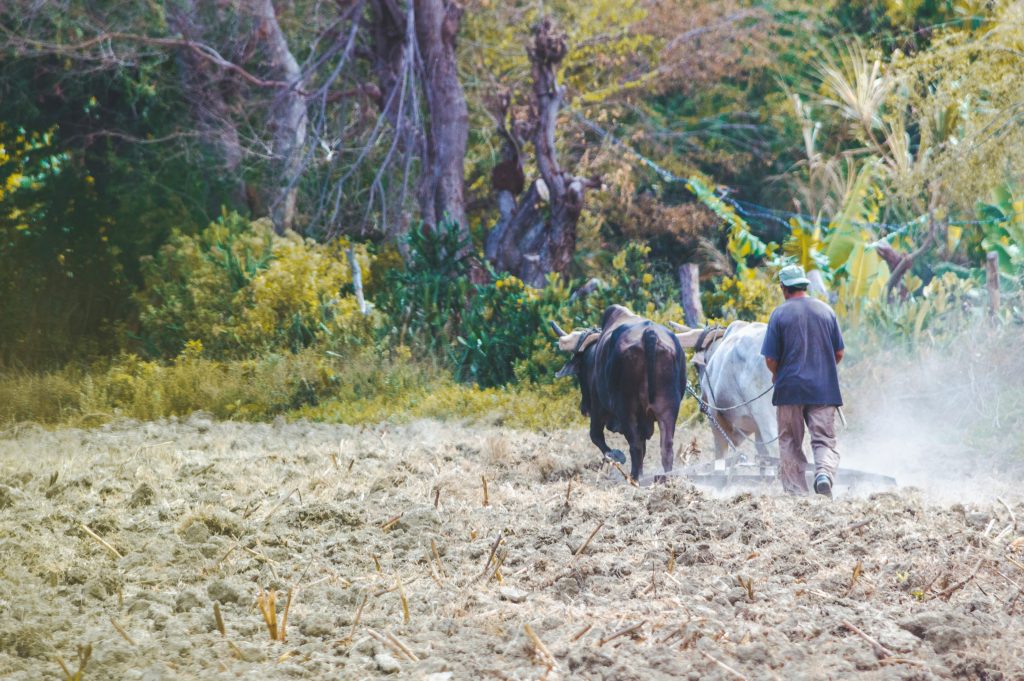
Flower farms
Approximately 85% to 90% of flowers sold in the UK are imported from the Netherlands, Kenya, Colombia, Ethiopia and Ecuador. Places with warmer climates are especially popular as allow flowers to grow year-round. Depending on the variety, flowers may be grown outdoors, inside greenhouses, or in highly controlled environments where temperature, humidity and lighting are carefully managed. According to the UK’s Department for Environment, Food & Rural Affairs (DEFRA), environmental impacts vary significantly depending on where and how crops are produced.
Prepped and chilled
Once flowers are ready to harvest, timing is everything. They’re cut at specific stages of development to maximise vase life. Workers quickly sort, grade and bundle the stems before placing them into cold storage. The Royal Horticultural Society explains how keeping flowers chilled slows down ageing and helps preserve their freshness before and during transport.
Transport
Flowers are first moved from farms to processing centers and then onto airports, refrigerated lorries or cargo ships – depending on where they’re headed – and finally delivery vans. They will also be packaged according to the transport required, which can generate more waste. Since cut flowers are highly perishable, many premium flowers are transported by air, especially when travelling between continents. Air freight is considerably more carbon-intensive than sea or road transport, making this one of the biggest contributors to the environmental footprint of many bouquets.
Wholesale and storage
Once flowers arrive in the UK, many pass through wholesalers before reaching supermarkets, online retailers or independent florists. Throughout this process they continue to be transported and refrigerated to maintain freshness, requiring electricity at every stage of storage and distribution. They will also be re-packaged in anything from paper to plastic. I’ve seen some flowers individually wrapped.
Treatment
It’s also worth noting that during this whole process, cut flowers are primarily treated with a combination of sugars (for energy), acidifiers (to aid water uptake), biocides (to stop bacterial rot), and ethylene inhibitors (to delay wilting and petal drop). These treatments allow stems to survive long-distance transit and are often also provided as commercial post-harvest solutions. If they are used or provided, they also add their own carbon footprints.
Display
Finally, the flowers reach the consumer, where they may last anywhere from a few days to a couple of weeks before being composted or thrown away. It’s a remarkably short lifespan considering everything that happened to get them there.
A bunch of environmental problems
The environmental impact of cut flowers isn’t caused by one single issue. Instead, it’s the result of several different stages adding up.
Energy
One major factor is energy use during production. Flowers grown in heated greenhouses require significant amounts of energy, particularly during colder months. Research carried out by Cranfield University found that heated greenhouse production can sometimes generate a higher carbon footprint than importing flowers grown naturally in warmer climates, depending on the production methods used and country distances.
Chilling the flowers throughout the entire supply chain also uses energy. From refrigerated warehouses to delivery vehicles and shop displays, keeping flowers cool extends their lifespan but increases overall energy consumption.
Transport
While locally grown flowers often travel relatively short distances by road, imported flowers may travel thousands of miles. Air freight is especially carbon-intensive because aircraft consume large amounts of fuel relative to the cargo they carry. The Intergovernmental Panel on Climate Change (IPCC) recognises aviation as a major contributor to greenhouse gas emissions.
Water
It takes around 7–13 litres to produce one rose flower and stem. That’s even more daunting considering that farms are often in regions where water resources are already under pressure. Research on the water footprint of export flower farms on Kenya showed that commercial flower farms were responsible for a sizable drop in the lake water level. This is not a one off. Agriculture accounts for around 70% of global freshwater withdrawals, highlighting why efficient water management is increasingly important across all crop production.
Synthetic inputs
On top of the treatments mentioned earlier, pesticides and fertilisers are another consideration. Like many commercial crops, flowers require pest and disease management. Poorly managed pesticide use can drive significant ecological degradation, local water pollution and severe health risks for agricultural workers, especially when synthetic or chemical variations are used. To reduce such risks, the World Health Organization and the Food and Agriculture Organization developed an international code of conduct for pesticide management.
Packaging
Many bouquets are wrapped in plastic sleeves, tied with synthetic ribbons and packaged in cardboard or foam boxes for transport. Although some of these materials are recyclable, many still end up as waste. This article does a great deep dive into this issue. In short, it explains how the fresh flower industry produces an estimated 100,000 tons of plastic waste each year. (Florists in North America and Europe see a 40% rise in packaging demand around Valentine’s Day alone.) Lots of floral arrangements also use green foam. This is a small, single-use block made from around 10 plastic bags that deteriorates into microplastics. All in all, an awful lot of synthetic materials to surround something natural.
How the flower industry is improving and we can make better choices
The good news is that the flower industry isn’t standing still. Many growers, retailers and certifiers are working to reduce environmental impacts while improving conditions for workers. Some growers are even experimenting with renewable energy, biological pest control, peat-free growing and more efficient irrigation systems to reduce environmental impacts. The Royal Horticultural Society actively encourages peat-free growing because peat extraction damages valuable carbon-storing habitats.
One of the easiest things you can do is buy seasonal and locally-grown flowers. These usually require less artificial heating or synthetic growth boosters and often travel much shorter distances before reaching customers so involve less chilling, synthetic treatment and fuel pollutants. Organisations such as Flowers from the Farm support hundreds of independent British flower growers who specialise in locally grown seasonal blooms. You can ask sellers where their flowers come from. Independent florists often know exactly which growers they buy from and what species are seasonal, and farm websites will also tell you what they are currently growing.
If you’re buying imported flowers, look for recognised certification schemes. Fairtrade flowers don’t just support fair wages and working conditions – its standards also include requirements around responsible water use, waste management, biodiversity and reducing harmful chemicals. Another useful certification is the Floriculture Sustainability Initiative, an international partnership that works towards more sustainable flower production across environmental and social issues.
It’s worth paying attention to labels. The Fairtrade certification is often displayed in the UK, but identifying locally grown flowers can require reading the small-print – or just buy directly from farm websites! Many now offer subscription services or pick-your-own events, helping support local businesses while reducing transport distances. At supermarkets it can be trickier to find specific information, but if a bouquet tells you it’s British-grown and seasonal, that’s usually a positive sign. You can also reduce waste by choosing brands or florists that use recyclable or compostable wrapping instead.
Which species are often local in the UK?
There isn’t one perfect eco-friendly flower, so here are just a few tips on what is often seasonal and local in Britain. Flowers such as sweet peas, cosmos, cornflowers, dahlias, snapdragons and sunflowers can all be excellent local choices during their natural growing seasons. Winter gets trickier, but “grown not flown” options include Narcissi, early Tulips, Anemones and festive evergreens. Native wildflowers are less commonly sold but make for a great option. The Royal Horticultural Society recommends choosing plants that benefit pollinators, as these help do their bit while they’re growing.
Another simple tip is to buy flowers that last longer. A bouquet that stays fresh for two weeks generally provides more enjoyment than one lasting only a few days, making better use of the resources that went into producing it. Some bunches will include a time estimation on the label; others you can ask the seller about. When choosing, look for crisp, unopened buds, unblemished petals, and bright green stems with no slimy textures. Fully bloomed flowers will often have passed their peak.
The bottom line
Flowers aren’t villains, and buying a bouquet doesn’t make someone environmentally irresponsible. Some flowers have travelled thousands of miles by air or been grown using energy-intensive methods, and others grown seasonally just a few miles from your home. The difference can be significant but subtle to spot.
The encouraging part is that consumers have real influence. By choosing seasonal flowers, supporting local growers, looking for trusted sustainability certifications like Fairtrade, asking florists where their flowers come from, and avoiding unnecessary plastic packaging, you help encourage more environmentally responsible practices across the industry.
Small choices really do add up. The more people ask questions about where their flowers come from, the more retailers and growers have an incentive to invest in sustainable production. We don’t have to stop buying them altogether, we’re just putting a little more thought into a gift that is already thoughtful!