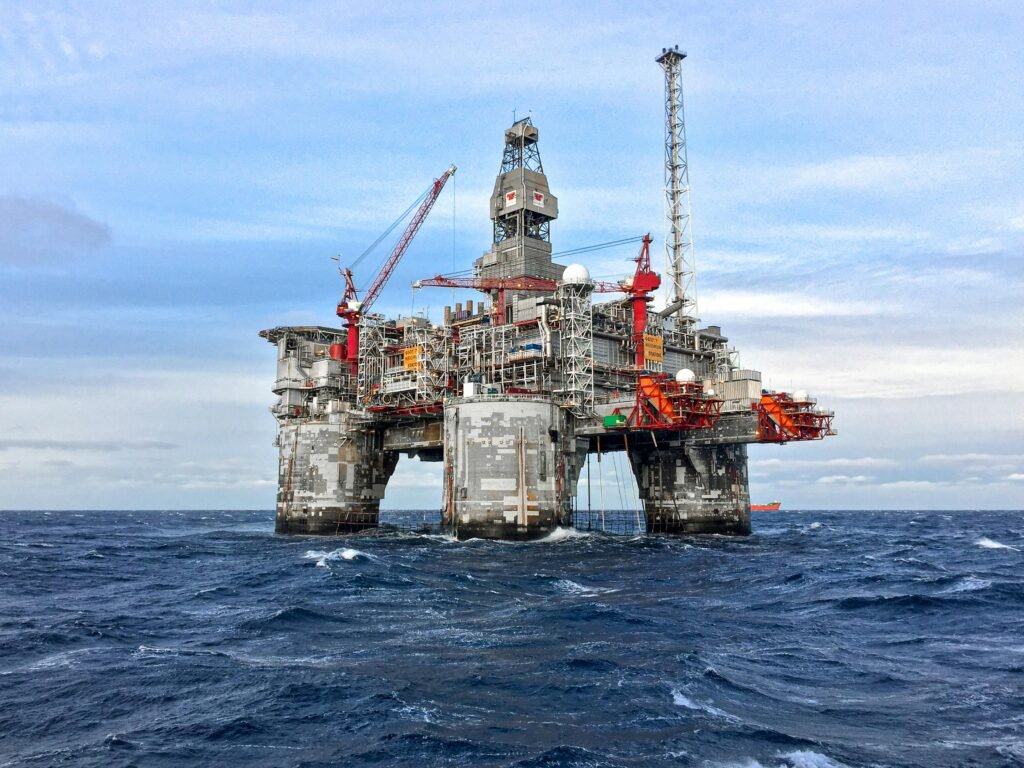
If you have ever filled up your car, paid a heating bill or watched politicians argue about energy prices, you have already seen the effects of oil and gas subsidies – even if nobody called them that.
I’ll admit, I don’t pay as much attention to some issues as I should. If it sounds remotely like math, my brain turns off. To me, the word “subsidy” sounded technical. I knew subsidies have a huge impact on how much energy costs, how governments spend public money, and even how quickly countries move toward cleaner energy. But I stopped short of questioning “how?” Until now. Lately, I’ve been challenging myself to take a closer look at issues I’ve previously brushed past, and today subsidies made the cut. I want to understand what they are, how they differ around the world, and why people on TV argue about them so much. It might be a fairly broad-stroke understanding but at least the next time the issue is raised, I’m not going to feel quite as ‘out of the loop’. Feel free to join me.
Around the world, governments spend hundreds of billions of dollars every year supporting fossil fuels in different ways. Some governments do it to keep fuel affordable for families. Others do it to protect jobs, support domestic energy production or maintain energy security. At the same time, economists, climate scientists and international organisations are increasingly questioning whether these subsidies still make sense in a world that’s trying to reduce emissions and manage public spending more effectively.
What exactly is a subsidy?
In the context of oil and gas, a subsidy is any government policy that lowers the cost of producing fossil fuels, lowers the price consumers pay for them, or provides financial advantages to companies operating in the sector.
The International Monetary Fund (IMF) defines explicit fossil fuel subsidies as situations where consumers pay less than the actual supply cost of a fuel, or where governments directly support producers through measures such as tax breaks or financial assistance. The IMF also uses a broader definition that includes what economists call “implicit subsidies,” where fuel prices fail to reflect environmental and health costs such as air pollution and climate impacts.
Think of it this way: if a government helps an oil company reduce its taxes, that is a subsidy. If a government keeps petrol prices artificially low for consumers, that is also a subsidy. If a government spends public money helping companies explore for new oil and gas reserves, that can be considered a subsidy too.
The International Energy Agency (IEA) explains that many consumer subsidies work through a “price gap” system, where governments keep domestic fuel prices below international market prices. If like me, you have no background in public finance, it helps to think of subsidies as essentially a way that governments influence the energy market. Instead of allowing prices to rise and fall entirely according to supply and demand, governments step in and absorb some of the costs themselves.
How different countries and regions subsidise oil and gas
The way subsidies work varies significantly from one country to another. Having lived across multiple continents, I’ve noticed that petrol prices (and access) can vary wildly, and quietly wondered why. Here is a quick breakdown of the key subsidy approaches.
Middle East
In many Middle Eastern countries, consumer subsidies have historically been the most visible form of support. Countries such as Saudi Arabia and several Gulf states have often sold fuel domestically at prices below international market levels. This approach has been used to share resource wealth with citizens and keep living costs lower. The IMF notes that the Middle East and North Africa region accounts for a large share of explicit fossil fuel subsidies worldwide.
Asia
Across parts of Asia, consumer subsidies are also common. Countries such as Indonesia, India and Malaysia have historically used fuel price controls to shield households from global oil price spikes. In recent years, several governments have attempted reforms, although political pressure often increases when fuel prices rise sharply. The IEA has repeatedly documented how governments in Asia have used fuel pricing mechanisms to manage affordability during energy market volatility.
Europe
Europe generally relies less on direct fuel price subsidies than many developing economies, but support still exists through tax policies and emergency measures. During the energy crisis following Russia’s invasion of Ukraine, many European governments introduced temporary price caps, rebates and energy support schemes to protect households from soaring costs. The IMF reported that explicit subsidies rose significantly worldwide during this period as governments intervened to contain retail energy prices.
USA
In the United States, support often takes the form of producer subsidies rather than direct consumer price controls. These can include tax deductions, accelerated depreciation rules, leasing arrangements on public land and various incentives for exploration and production. The Organisation for Economic Co-operation and Development (OECD) tracks these forms of support through its fossil fuel support database and classifies them as measures benefiting producers across the supply chain.
Canada
Canada has historically provided support through tax preferences and investment incentives tied to fossil fuel production, particularly in oil-producing provinces. In recent years, however, the federal government has committed to phasing out what it calls “inefficient” fossil fuel subsidies as part of international climate commitments.
In resource-rich countries that export oil and gas, subsidies can sometimes take a different form. Governments may sell fuel domestically at prices below what they could earn on international markets. According to both the OECD and IEA, these arrangements represent an opportunity cost because governments effectively give up export revenue to maintain lower domestic prices.
Consumer subsidies vs producer subsidies
When people talk about fossil fuel subsidies, they are usually referring to two broad categories: consumer subsidies and producer subsidies.
Consumer subsidies directly benefit people or businesses buying fuel. They often appear as fuel price caps, discounts, rebates, or regulated prices that keep petrol, diesel, natural gas, or electricity cheaper than market rates. Governments often justify these subsidies as a way to protect households from rising energy costs, especially during economic crises. The IEA’s research shows that consumer subsidies increased dramatically during the global energy crisis in 2022 as governments tried to cushion the impact of higher prices.
Producer subsidies work differently. These are benefits given to companies involved in exploration, extraction, refining, transport or storage of fossil fuels. They can include tax breaks, favourable loans, public financing, infrastructure support and investment incentives. The OECD defines producer support as transfers or expenditures that benefit fossil fuel producers throughout the production chain.
Globally, consumer subsidies tend to be more visible and often represent a larger share of explicit fossil fuel support. According to the IMF, consumer subsidies accounted for roughly 85% of explicit fossil fuel subsidies in 2024, while producer subsidies accounted for around 15%. That said, producer subsidies often receive more political attention because they raise questions about whether highly profitable industries should continue receiving public support.
The push for reform
Few areas of economic policy generate as much debate as fossil fuel subsidies. Supporters argue that subsidies help protect households from energy poverty, prevent economic disruption, support jobs and strengthen energy security. For countries with large oil and gas industries, subsidies can also help maintain investment and competitiveness. Critics argue that subsidies distort markets, encourage wasteful energy use and slow down investment in cleaner technologies.
The IMF has become one of the most influential voices calling for reform. According to its analysis, fossil fuel subsidies create significant fiscal costs, encourage inefficient resource allocation, contribute to local air pollution, worsen climate change and disproportionately benefit wealthier households rather than the poorest members of society. One of the IMF’s most striking findings is that wealthier households often receive a larger share of subsidy benefits because they consume more energy. For example, a family with multiple vehicles, larger homes and higher energy consumption tends to benefit more from low fuel prices than a lower-income household with smaller overall energy use.
Economists frequently argue that blanket subsidies are an inefficient way to help vulnerable populations. Instead, many recommend targeted social support, such as direct cash transfers or income assistance, which can help lower-income households without encouraging excessive fuel consumption.
Another major concern is pollution. The IMF argues that when energy prices fail to reflect environmental and health costs, consumers receive misleading price signals. This encourages higher fossil fuel use and makes it harder to reduce emissions. The organisation estimates that reforming fossil fuel pricing could substantially reduce global carbon dioxide emissions while also generating public revenue that governments could invest elsewhere.
International organisations including the IMF, International Energy Agency, OECD, United Nations, World Bank, and G20 have all supported efforts to phase out inefficient fossil fuel subsidies over time. Their general position is not that governments should abandon vulnerable households, but that support should be targeted more effectively and paired with investments in cleaner energy systems and stronger social safety nets.
The challenge is political. Fuel prices are highly visible. When subsidies are reduced, people often feel the impact immediately. Governments therefore face the difficult task of balancing long-term economic and environmental goals against short-term public concerns.
Where to from here?
Despite the challenges, there are reasons to be optimistic. Several countries have shown that subsidy reform can work when it is carefully planned. Indonesia, for example, has repeatedly reduced fuel subsidies while expanding social assistance programmes. India has also implemented reforms to reduce some fuel subsidies while improving direct benefit transfers to eligible households. These experiences suggest that reforms are more successful when governments clearly explain the changes, provide targeted support and build public trust.
What tends not to work is removing subsidies suddenly without offering alternatives. When households feel abandoned or face sharp price increases with little warning, public backlash can be severe. The broader lesson is that energy policy works best when it focuses on both affordability and long-term sustainability. Governments need to protect vulnerable households while creating incentives for cleaner and more efficient energy systems.
The debate over oil and gas subsidies is not going away anytime soon. But understanding how these systems work is the first step toward understanding some of the biggest economic, political and environmental decisions being made today. The good news is that more governments are experimenting with reforms, more data is becoming available and more people are paying attention. (It’s not much but I’m trying my best to become one of them, and if you’ve got this far in the article, then that makes two. Thank you.) That creates an opportunity for smarter policies that support both people and the planet.