The Hidden Benefits of London’s Green Spaces

London is often cloudy, but that doesn’t mean all activities must be done inside. This is one of the greenest cities in the world, in fact, in 2019 it was named the world’s first National Park City. As such, London offers a wide range of communal spaces where you can connect to nature in a variety of ways. Doing so brings so many benefits – connecting with your local community, taking time to decompress or learning more about the environment – to name just a few! We take a quick look at why London’s green spaces are more than just a pretty place to eat your meal deal…

What are some of the social benefits?

While high streets might be the hive of working activity in London’s boroughs, green spaces are undoubtedly the center of community life. There are around 4,000 parks and 3,000 other dedicated nature spaces (such as canals, riversides, walking trails and more) across the city. Nearly half of the city itself (49.7%) is made up from green and blue spaces. These are defined as natural or semi-natural spaces featuring vegetation (green) or water (blue). They support London by cooling it, improving air quality, hosting wildlife and protecting its history. They also provide us with an often-free place to escape the hustle and bustle, meet friends, connect to nature and engage with community groups. A study undertaken as part of The Camden And Islington Parks For Health Strategy 2020-2030 found that people who make regular use of them tend to be happier, healthier and live longer lives. However, this doesn’t mean you must just wander the grass and sit on benches, if that’s not your thing – there are so many ways to get involved!

You could join the endless list of groups who use green spaces as their main hub, from sports teams, park runs and playground meetups, to music or dance performances in public bandstands, to dedicated clubs spanning photography, dog training, roller-skating, chess…you name it! If you already have an interest, you could search specifically for dedicated groups who are meeting in your local area. Or you could start by looking at the activities offered in nearby green spaces and then try a new hobby! Most will usually have boards advertising what is going on. Many park cafes also serve as informal community centers and might host a range of social and creative activities themselves, so ask around at any near you! Joining a local group is a great way to meet people with similar interests who already live in your community. In turn, this can deepen your own quality of life and connection to your area.

Multiple London studies (LSEGLA and Well London, among others) show connecting to local groups and improving your community ties boosts wellbeing, reduces loneliness, creates meaningful friendships, enhances a sense of belonging and improves health resilience. It can also be better for the environment and your energy levels, as you are not having to commute halfway across the city to pursue a similar activity. Some research even shows that local friendships tend to last longer due to more in-person proximity, communication consistency, shared habits, easier access for urgent support and affordable meet-ups (sources 12 and 3). However, green spaces are not only used by locals. You can also take advantage of them when hosting your existing friends! It won’t surprise many of you to hear that the square footage in an average London flat is limited, and goodness me, the cost of group bookings at activity venues gets higher every year. Instead, hosting a picnic, celebration or games day in a nearby green space allows for more attendees and can be easily tailored to suit a wide range of ages, while still ensuring everyone has fun. Just make sure that you all dress for the weather!

What are some of the health benefits?

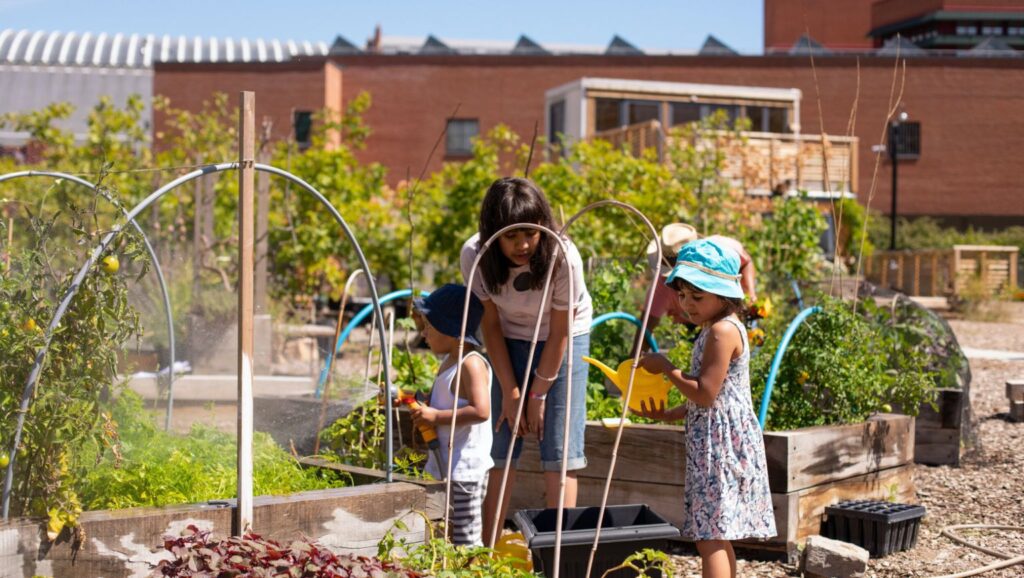
Roughly one in five Londoners (21%) do not have a private or shared garden. Most of us make do with pot plants or walks around the park – but these are not our only options! Allotments and community gardens are brilliant ways to get hands-on with nature, meet our neighbours and develop a sense of community pride. Both spaces provide relaxing natural areas where you can sit and enjoy as well as actively pitch in. Some even include greenhouses! Since they tend to be less busy than public parks and feature a wider range of fauna, they are also a crucial safe haven for butterflies, bees and hedgehogs. Community gardens often feature maintained areas such as ponds or flowerbeds that are upkept by local volunteers (why not join them?!). These can also host community events and school trips. Allotments are spaces dedicated to gardening, with privately allocated plots. Waiting lists to be assigned one can be long – but even without your own plot, an allotment is a great way to join the community, swap gardening tips, build long-term relationships and attend volunteer days. It’s fun for people of all ages! Each plot has its own style and it’s inspiring to see what everyone chooses to grow. Community gardens and allotments are also proven to improve public perceptions about an area, as well as give participants a sense of social identity, satisfaction and connectivity (sources 123 and 4).
 
Gardening also brings many other proven benefits, such as supporting mental health, reducing stress and depression, boosting vitamin D, improving heart health and, if harvesting, supporting a balanced diet. The British Psychological Society found it also creates a sense of accomplishment, patience and responsibility that is not obtained by simply visiting nature. London has hundreds of sites across its boroughs. These are often managed by local councils or societies and are tucked away from main streets. You could be living right around the corner from one without knowing! You can locate the majority of those that are publicly funded via Allotment Online, however it is also worth asking around your area, as plenty of others are smaller and locally run. The RHS offers advice if you want to get a community garden set up near you.


What are some of the environmental benefits?

Did you know that London has more than 1,300 Sites of Importance for Nature Conservation? These make up nearly 20% of the city and host a wide variety of ecosystems, from ancient woodlands and grasslands to wetlands and heathlands. They are also home to more than 15,000 species of plants, animals and fungi. It is a great reminder that we are not the sole occupants of this busy city. Parks of all sizes often host educational centers or meet-ups where you can learn more about your wildlife neighbours and how to care for them. You can check out the London Wildlife Trust or your local council to see if any are taking place near you – everyone is welcome! There are also plenty of groups that run events with a specific environmental interest, like Wild In The City (reconnecting diverse groups with nature), ecoACTIVE! (hands-on outdoor education for children), the London Bird Club (bird watching meet-ups), Forage London (wild food walks and courses) or the Inner London Ramblers (exploring London’s many hidden nature trails), just for a start! The best part is that many of these meet-ups are free and family friendly!
 
You can also volunteer with conservation activities like litter picking or river clean ups, monitoring wildlife or planting trees. Many green spaces seek volunteers on their websites or you can attend through external organisations like Parks for London. However you prefer to learn, there is likely already a community just for you! Not only is this a great way to meet new and local friends, but it is an active reminder that nurturing nature starts on our doorstep. So often, we talk about sustainability and the climate as issues that exist on a distant and global scale. However, at the end of the day, our beloved house pets are not the only creatures in our care and many of the trees that we walk past have called our streets home longer than we have. Planet-wide issues are affecting them too. Learning more about their daily lives can help us value ours even more. 
 

In Conclusion

Overall, London’s green spaces are a great way to deepen roots in your community, while also bringing us physical and mental health benefits and reigniting our sense of purpose as custodians of our environment. They are a place where everyone is welcome and able to connect, contribute, recharge and learn. I cannot think of another space in this city that better says “whoever you are, whatever your interests, you belong”. 
 
If you are interested in learning more, below are some sites that contain some more information:
  • GoParksLondon is a project connecting Londoners with local parks.
  • London National Parks City can help you find green spaces to volunteer across London. It also has an urban map to help you plan any outdoor adventures!
  • Fields In Trust is a place to get inspired by those working across and using the city’s green spaces.
  • London City Hall offers official advice from the Greater London Authority on green space involvement.
One Cool Thing

If you need a bit of inspiration to explore the variety of London’s outdoor spaces, take a peek at this short doc series: “Outside with Lira” on WaterBear or Youtube produced by EarthMinutes

Leave a Comment

Your email address will not be published. Required fields are marked *

This site uses Akismet to reduce spam. Learn how your comment data is processed.

0