Let’s be honest, most of us don’t think very much about the calendar we live by. It sits quietly on our phones, reminding us about school runs, work deadlines, dentist appointments and birthdays. However, the calendar you follow – whether solar (like the one most of the world uses today) or lunar (like the traditional Chinese calendar and many religious calendars) – drastically shapes how societies work, how people celebrate and even how we relate to nature.
I was raised in a house that participated in three different New Year celebrations. In 2026, Muharran will be 16th June, Spring Festival on 17th February and of course the Solar New Year’s Day was 1 January. Despite this always being my norm, until now I’ve never questioned what impact – if any – our calendars might have on our planet. So, what happens when humanity follows the sun versus the moon? Could one be healthier for us or better for the planet? First, a background check…
What are solar and lunar calendars?
A solar calendar is based on Earth’s orbit around the sun. One full orbit takes about 365.24 days, which is why the modern Gregorian calendar has 365 days and a leap year every four years. This system keeps months and seasons aligned — summer stays in summer, winter stays in winter. Daylight Saving Time is a human-made adjustment designed to maintain this seasonal rhythm.
A lunar calendar, by contrast, follows the moon’s phases. One lunar cycle lasts around 29.5 days, meaning 12 lunar months equal about 354 days — roughly 11 days shorter than a solar year. That’s why purely lunar calendars (such as the Islamic calendar) shift through the seasons over time, while lunisolar calendars (like the Chinese calendar) add leap months to stay roughly aligned with seasonal cycles. Daylight Saving Time is less necessary, as daily life naturally adjusts to changing daylight.
If you want to read more on the science of how these are sceduled, check out NASA’s article explaining moon phases or the Royal Museums Greenwich’s research on why calendars exist.
Why were different calendars established?
Us humans have always tried to organise life (if anyone can sort mine out, please get in touch!) Solar calendars date back to ancient Egypt, around 3000 BCE, when farmers needed to predict the Nile floods. The Romans later refined this into the Julian calendar, and in 1582 the Gregorian calendar that many of us use today was introduced.
Lunar calendars are even older. Ancient Mesopotamian and Chinese civilisations tracked the moon for agriculture, ritual and timekeeping. The Chinese calendar, estimated to be over 3,000 years old, blends lunar months with solar seasons. So from the start, calendars were not just about time but about survival, growth, connection to the planet and social order.
The cultural impacts of solar and lunar calendars
Solar New Year: January 1
The Gregorian New Year is fixed. Midnight, fireworks, resolutions, champagne, maybe a hopeful “new year, new me.” (Just a few weeks ago, I wrote about how families can observe this New Year’s Eve here – eek, how time is flying!) It’s clean, predictable and global – businesses close their books, governments reset budgets, schools plan semesters and the world synchronises. It’s efficient but also slightly…artificial. January 1 isn’t tied to nature. It’s winter in the northern hemisphere and summer in the southern – hardly a universal seasonal reset. I grew up in a hot country that would put fake snow decorations up in December, what’s up with that?!
Still, rituals matter socially, so this does bring some health benefits. Shared celebrations strengthen community bonds and mental wellbeing. There is a sense of routine and identity in having a role to play, a schedule to stick to, and in knowing people all around the world are celebrating with you.
Lunar New Year: Chinese New Year
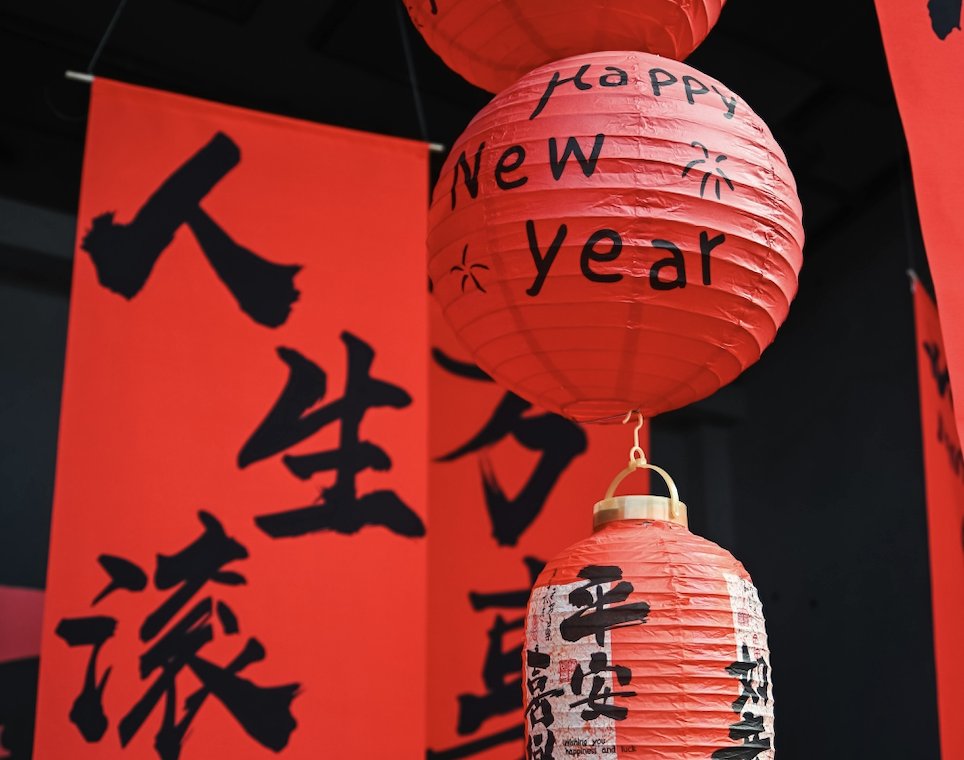
The Chinese New Year follows the lunar cycle and often falls between late January and mid-February. It is aligned with the coming of spring. The symbolism is deeply nature-based: renewal, growth, cleaning away the old year and welcoming luck and fertility. Traditions include deep “spring” cleaning of homes (resetting energy), family reunions (it is the largest annual human migration on Earth!), eating seasonal foods that are linked to harvest cycles, honouring ancestors and taking time to rest and reflect.
Seasonal and nature-linked celebrations also support emotional wellbeing and social connection, but additionally can help build memory association and bring balance from aligning activities with a circadian rhythm. Also, in many cases they create a sense of achievement – you are not celebrating a date, you are celebrating a season survived. A mental approach focused more on milestones than months. In broad strokes, if a solar new year resets the calendar, a lunar new year resets the human spirit.
How solar calendars reflect business
The solar calendar became dominant largely because it’s predictable and stable. Seasons stay in place year after year, essential for productivity and economic stability. Imagine stock markets drifting 11 days earlier each year – chaos! Historically, the rise of solar calendars coincided with expanding empires, bureaucracy and commerce. Today, we can see examples of this in standard financial quarters (Jan–Mar, Apr–Jun, Jul-Sep and Oct-Dec), academic years tied to harvest cycles (a long summer break, where historically children would be needed on family farms), and global shipping and manufacturing schedules (many businesses operate internationally and industries need to stay aligned with government budgets).
Fun fact: the UK financial year runs from April to April because in 1752 it shifted from the Julian to the Gregorian calendar to create more routine, but this removed 11 days and no one wanted to lose that tax revenue! Yet another example of calendars prioritising business.
How lunar calendars reflect nature
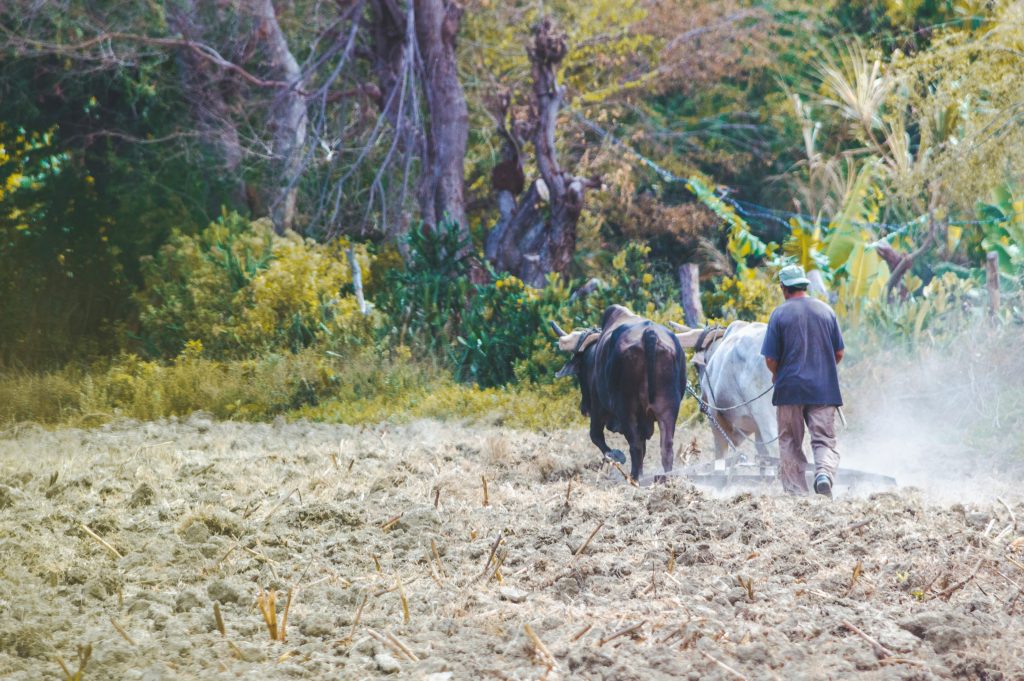
The lunar calendar reflects natural cycles more directly than solar. Moon phases influence tides, much plant growth, some animal breeding and migration, while the calendar allows for hours of daylight to ebb and flow without anyone resetting the clocks. Many cultures historically planted, harvested and fished by the moon. Today, biodynamic farming still uses lunar cycles. Many types of farming, such as rabi, zaid, kharif, nomadic, flower, pastoral, arable and horticultural still follow seasonal land rotations and growth schedules, especially if they are organic. The lunar calendar is also deeply embedded in religious and cultural rhythms – Ramadan, Chinese New Year, Diwali and Jewish festivals, to name a few. It emphasises progression rather than control and experiences time as something lived, not managed.
Could modern business operate on a lunar calendar?
We have tried to adapt nature’s schedules to better suit business – eg. growth hormones, controlled farming environments and year-round production. However, left to its own devices, nature will never comfortably operate under a Gregorian calendar or business-first model. But could business operate under a nature-first calendar?
Interestingly, yes – in some contexts. Historically, ancient China ran complex economies using a lunisolar calendar, Islamic societies coordinated trade across vast regions using a lunar system and many agricultural communities still use lunar planning. However, a purely lunar system causes drift against seasons, which complicates taxation, contracts and planning. A modern world fully on a lunar calendar would need flexible fiscal years, moving school and tax cycles and adaptive seasonal planning. It’s not impossible, just very messy.
Which calendar is healthier for humans?
There’s no be-all-end-all way to look at this. Both calendars support community – just differently. Socially speaking, the solar calendar created a shared global coordination while the lunar calendar creates deeper seasonal understanding and cultural bonding. Neither is “better,” but lunar celebrations often involve dedicated space for more extended family time and rest, which research shows vastly benefits social health.
From a mental health perspective, solar calendars provide structure and predictability. If my digital calendar ever gets deleted, you could hear me scream from Mars. We can rely on the world around us for (relative) continuity and we can be reliable. We can stay in touch with family abroad, take a class, schedule a holiday, work a day job and get paid into a bank account, some of us without even leaving the house! Stable scheduling also helps societies share knowledge and opportunities, respond to disasters and monitor climate shifts and economic change. The ability to plan, align and streamline operations year-round opens doors in terms of uniting everyone. One point to solar.
However, circadian research shows that seasons unavoidably affect our mood regulation, hormones, sleep and energy. Having a society and schedule built to take this into account and align throughout the year makes life a lot more communal. Within this, there is structure and consistency in another style. Imagine a world where your employer gives shorter hours to help accommodate the winter blues, or promotes reflection and cyclical thinking rather than a constant forward push. An argument for lunar being “healthier” is not the moon cycles themselves, but the mindset that comes with it – it anchors time in natural change. Seasonal living supports circadian rhythms (in some cases also immunity) and cyclical lifestyles reduce burnout. One point to lunar.
Which calendar is better for the planet?
Here’s where things get interesting. The solar calendar enabled industrialisation, globalised production, constant growth economies and a 24/7 productivity culture. These systems contributed heavily to environmental strain – fossil fuel use, overproduction and consumption cycles tied to fiscal quarters. IPCC does a good overview of the links between industrialisation and climate change. However, this isn’t the calendar’s fault; it’s how humans used synchronised time to scale industry.
On the flip side, lunar and seasonal living historically encouraged farming and resource use that aligned with natural cycles, balanced periods of productivity and encouraged periods of rest and lower resource extraction. This traditional ecological knowledge is now recognised as important for sustainability. So while lunar calendars don’t automatically protect the planet, they culturally support lifestyles that tend to be less extractive.
There is no strong scientific evidence that simply switching calendars would directly improve environmental health. The planet doesn’t respond to calendars, it responds to human behaviour. Also, switching calendars again would likely cause chaos (lest we forget the UK tax year fiasco!). However, there is a strong argument for implementing certain traits from a lunar calendar. If we were to encourage seasonal consumption and connection to nature, or reintroduce an “ebb and flow state” by dedicating rest periods and reducing the 24/7 push for high production, then indirectly, humanity’s environmental footprint could decrease.
Solar vs Lunar calendars: finding balance
The solar calendar gives us stability, economic coordination, predictability and global synchronisation. The lunar calendar offers natural rhythm, cultural depth, reflection and connection, seasonal awareness and a gentler relationship with time. Maybe the real answer isn’t choosing one, but remembering what each teaches us.
We need the sun for structure, we need the moon for balance. In in a busy modern world where we are surrounded with clock-in-clock-out schedules, reconnecting even just a little with natural cycles can be good for us and the planet alike.