
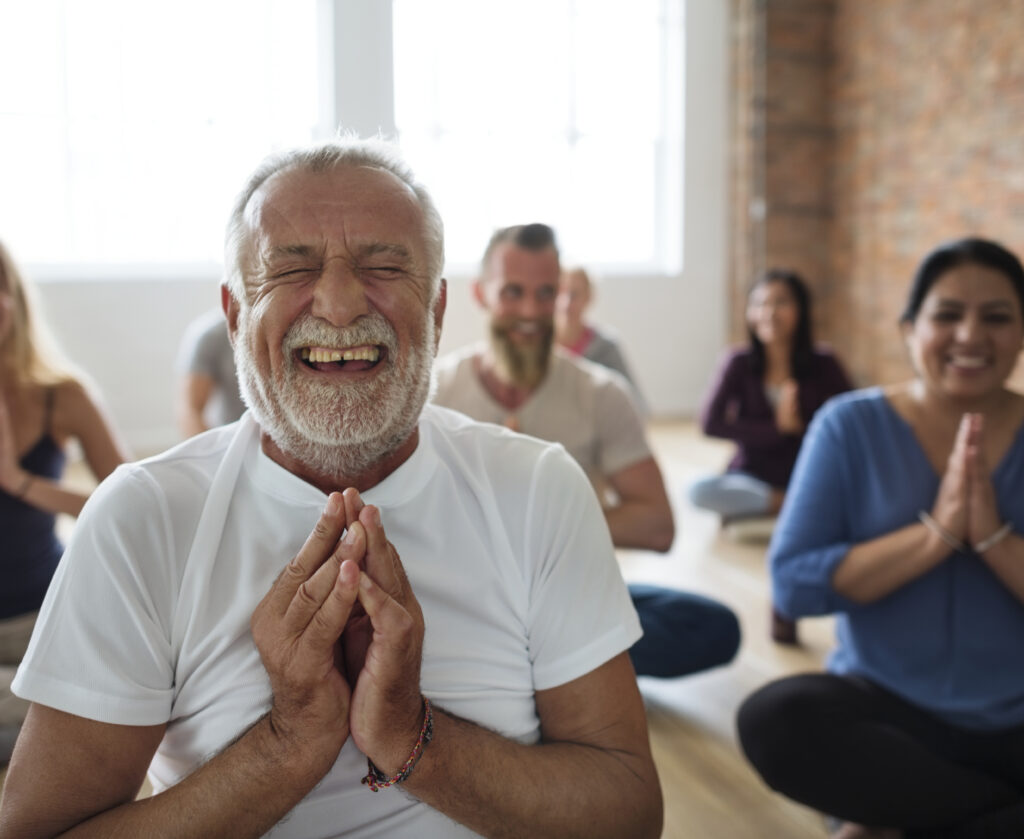
It might sound like just another bizarre trend, but laughter yoga is an established practice helping people all around the world release tension. It combines intentional laughter with traditional breathing techniques from yoga. Founded in 1995 by Indian physician Dr. Madan Kataria, laughter yoga was created on the simple idea that “the body can’t distinguish between voluntary and spontaneous laughter” – so even if you start by “laughing on purpose,” it quickly becomes real and contagious.
Unlike a stand-up comedy show or humerous film, laughter yoga doesn’t rely on jokes or funny stories. Instead, laughter is used as a physical exercise in a group setting, often alongside breathing (pranayama) and gentle movements. This is designed to improve oxygen intake and allow people of all ages and fitness levels to enjoy its benefits. In many places, laughter yoga takes place in laughter clubs – regular social gatherings where people meet simply to laugh together in a supportive and playful environment.
What happens in a typical session?
A standard laughter yoga class or club session is both structured and playful. Booked sessions typically last from 30 to 60 minutes, but many of the exercises can also be practiced individually in just a few minutes, making them accessible even for busy schedules. No special gear or clothing is required and many sessions are considerate to different body types and requirements, making the benefits equal for all. You could expect to begin with a warm-up which involves basic breathing exercises to get participants relaxed and in the right headspace. Deep breaths help clear “stale air” from the lungs and prime the body for laughter. Participants often clap rhythmically and chant simple sounds (e.g, “ho-ho-ho, ha-ha-ha”) to stimulate breathing and loosen inhibitions. Different breathing exercises, often those used in standard yoga practices, might help expand your normal breath capacity and control your inhaling and exhaling. Attendees can also usually gauge and adjust for their own ability within each practice.
Then you might move into the heart of the session. Guided by an instructor, the group could practice a series of laughter games, gentle movements and vocal and breathing exercises. At first, laughter and breathing may be “forced,” but with eye contact and group energy it quickly becomes genuine, contagious and almost unconscious. As silly as the exercise might sound, it is not long until attendees usually start to feel themselves breathing deeper and feeling lighter, as well as more connected to those around them. Many classes also include pair or small-group activities designed to further build on this connection. These can include improv, games, shared affirmations, following along with made-up gibberish and silly noises, or testing out different laughter styles. Sessions usually end with a period of quiet breathing or simple meditation. This gives you time to absorb the positive effects, regulate your heartbeat and leave feeling calm and uplifted.
What are the benefits?
People enjoy laughter yoga for many reasons, but here is a quick breakdown of some key physical, mental and social benefits.
A notable physical benefit of laughter yoga is that it is proven to boost oxygen intake and circulation, similar to mild aerobic exercise. Even short bursts of laughter – 10 to 15 minutes – can make a noticeable difference. Improved circulation and group exposure can also help enhance immune function, mildly increasing resistance to common illnesses. Some believe that it could help lower stress hormones like cortisol and adrenaline, helping the body relax. In general, the practice supports cardiovascular health as laughter raises heart rate and respiration in a gentle but lasting way.
When it comes to the mental or emotional benefits, practitioners often describe immediate positive effects on mood and stress levels. Laughing releases “feel-good” chemicals like endorphins, serotonin and dopamine, while the controlled-breathing exercises and gentle movements help reduce anxiety and stress. A slightly unexpected benefit, reported by many attendees, is that the practice also improves resilience by giving them the headspace to meet daily challenges in a lighter mental state. It is thought this comes from the combination of meditative exercises and a fun, light-hearted activity, as well as the benefits of experiencing connection with others in a shared social setting. Across the board, people report that laughter yoga helps with broader psychological wellbeing by encouraging a more positive outlook.
As laughter yoga is almost always done in a group, it’s inherently social. It encourages eye contact and shared playfulness and helps build connection and confidence, especially for those who feel isolated or shy. Many attendees say it creates a sense of belonging in a non-judgmental, lighthearted space, meaning they enjoy the social aspect as much as the laughter and exercise itself. This sense of connection is also likely heightened compared to some other social exercises, due to feeling silly together! It is hard to leave the room feeling alone when surrounded by people who have all just giggled with you.
Where to try laughter yoga
Laughter yoga is growing in popularity around the globe and venues offering sessions can be found in a surprisingly wide range of places. It is worth having a look in your local area or nearest city to see what is available. However, if you find the commute is too far or there are none offered at times that fit your schedule, it is also worth familiarising yourself online. I am not paid to promote any particular place (or the practice in general!), so the following comes from my own research. Laughter Yoga International, founded by Dr. Madan Kataria, runs free online sessions on Zoom from India, with various weekly times available. Hestia also provide weekend zoom sessions, Laughter Yoga Wellness offers one-on-one or group sessions online and even do events, and Celeste Greene hosts an online Laughter Club with twice-weekly 30-minute sessions. These are just some of dozens. You can also follow along with guided Youtube tutorials, however live calls are preferred so that you glean some of the social benefits.
If you’re based in London you’re in luck, there are several established in-person venues offering beginners’ sessions, community workshops and regular clubs and training. Two of the leading venues are United Mind and Laughter Yoga Wellness London, but you’ll find most groups welcome newcomers and are designed to be accessible, with no prior experience or fitness level required. Wear comfortable clothes, bring water and a playful attitude and come ready to participate. It’s okay to laugh “on purpose” even if it feels silly at first!
In conclusion, whether you’re looking to boost your mood, enhance your health, meet new people or just try a different activity, laughter yoga could be a good fit. It is a simple, low-pressure and fun practice, grounded in community and connection, with an open door whether you want to pop along by yourself or take your friends. Who doesn’t love having a laugh?! I might just see you there.
