Most of us don’t think much about where our energy actually comes from. You flip a switch, your phone charges, your heating works…but behind all of that is a system that’s changing fast, and an industry trying to keep up with growing demand. One idea aiming to help towns – and the environment – cope with this, is community energy projects.
I’m always curious about alterative sustainability options. Many can seem a bit over-optimistic, so I wanted to look under the hood and see what community energy projects are about – and whether they could realistically shape the future of energy, especially here in the UK.
What are community energy projects?
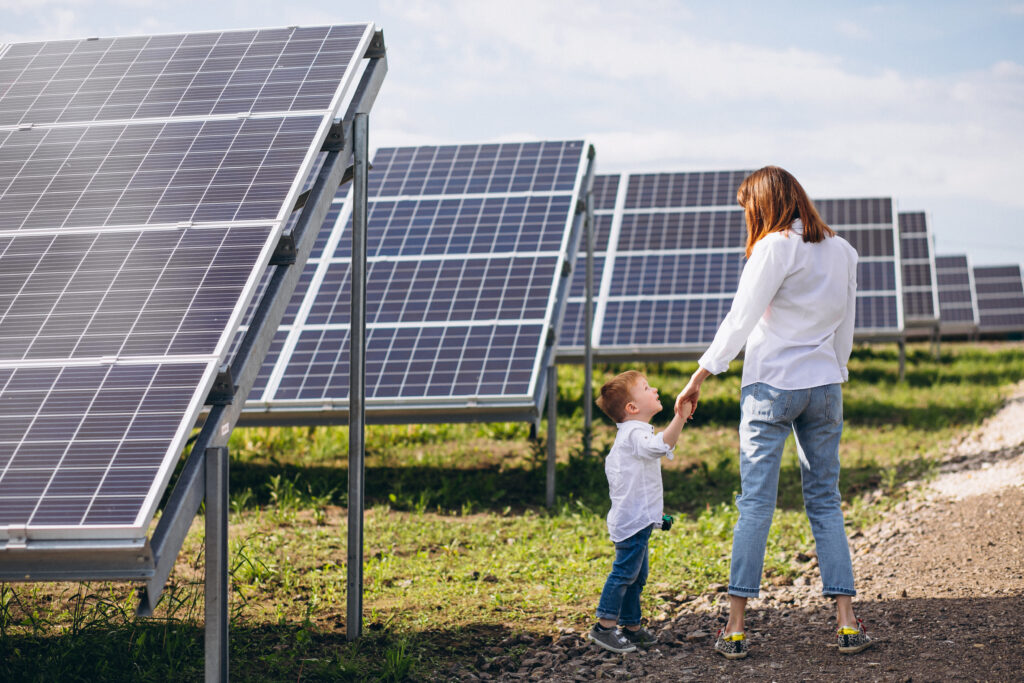
At its simplest, a community energy project is when a group of local people come together to produce and manage their own energy. Instead of relying entirely on large national energy companies, a community invests in renewable energy sources like solar panels or wind turbines and collectively owns or controls them. That means decisions are made locally, and any profits generated tend to stay within the community.
It’s not just about generating electricity either. Some projects focus on reducing energy use, improving efficiency or helping households cut costs. The common thread is that the community is directly involved and benefits from the outcome. The UK Energy Research Centre describes the practice as “collective action on energy by groups of people at a local level,” highlighting both the social and practical aspects of these initiatives.
Where are community energy projects happening?
Something that caught my attention about this initiative in particular is that it isn’t just a one trick pony – it’s already happening in many places, in many different ways. In the UK, there are hundreds of active projects. In London, Brixton Energy has installed solar panels on social housing, allowing residents to benefit from locally generated electricity. In Oxfordshire, the Westmill Wind Farm stands as one of the first community-owned wind farms in the country. Meanwhile, Bath & West Community Energy has funded a range of renewable installations and uses the profits to support local projects.
Across Europe, community energy is even more widespread. Germany is often seen as a leader, with a significant proportion of renewable energy capacity owned by citizens and cooperatives rather than large corporations. Denmark has also embraced the model, particularly with wind energy, where local ownership is often encouraged or required. Countries such as the United States and Australia are expanding community solar programmes, making renewable energy accessible to people who might not be able to install panels on their own homes.
What is the appeal of community energy?
The appeal of community energy projects comes down to three main areas: environmental impact, financial benefits, and social value.
From an environmental perspective, the advantage is clear. Most community energy projects rely on renewable sources, which produce far fewer carbon emissions than fossil fuels. Research published in Nature Energy suggests that decentralised renewable systems can play a major role in speeding up the transition to low-carbon energy. In short: producing energy locally and sustainably helps reduce the overall environmental footprint.
Financially, the model is quite different from traditional energy systems. Because the infrastructure is community-owned, any surplus income can be reinvested locally. That might mean funding community centres, improving housing or supporting energy efficiency programmes. A report from the Department for Business, Energy & Industrial Strategy found that community energy projects can deliver significantly greater local economic benefits compared to commercial energy developments.
There’s also a strong social element. Community energy projects tend to bring people together around a shared goal. They can increase awareness about energy use and give people a sense of control over something that usually feels distant and complicated. In a time when many systems feel centralised and impersonal, that local connection can be surprisingly powerful.
What are the downsides?
Of course, community energy projects aren’t perfect and it’s important to be realistic about the challenges. One of the biggest barriers is cost. Setting up renewable energy infrastructure requires significant upfront investment. While grants and community fundraising can help, raising enough money is still a major hurdle for many groups.
There are also regulatory challenges. The energy sector is heavily controlled and smaller community projects can struggle to navigate complex rules around grid access, licensing and pricing. According to the UK Energy Research Centre changes in government policy over the past decade have slowed the growth of community energy in the UK.
On top of that, there’s the issue of expertise. Running an energy project requires technical, financial and legal knowledge. Not every community has easy access to those skills, which can limit what’s possible. Finally, there’s the question of scale. Community energy projects are usually relatively small. While they can make a big difference locally, they’re unlikely to replace national energy systems entirely.
Could community energy projects support entire towns?
In smaller towns and rural areas, community energy projects tend to work well. There’s often more space for renewable installations, and communities may already have strong local connections. In big cities like London, things are more complicated. Space is limited and infrastructure is more complex. However, that doesn’t mean it’s impossible.
Urban projects are already finding creative solutions. Rooftop solar panels on apartment buildings, shared energy systems between properties and smarter energy management technologies are all helping make community energy viable in cities. This is where the idea of “smart cities” is important. By using digital technology and real-time data, cities can better manage how energy is produced and used at a local level. If you’re interested in how this works in practice, you can explore this example by Community Energy Projects.
In theory, a whole town could run completely off the grid in the same way that a single house can. My in-laws just renovated their “forever home” to become as sustainable as possible. Solar panels, battery storage, electric car port, recycled wood infrastructure, composting, underfloor heating, strategically placed windows, natural insulation, greywater systems – the works. Their entire house bills are now lower than my individual share (of a tiny flat, split amongst five housemates)!
As well as helping the planet, this home helps give them security. They are starting retirement in an uncertain economy where the pension age keeps climbing. Committing to an energy efficient home was one way of giving themselves the peace-of-mind that in another 10 or 20 years they will likely still be able to afford those bills, hopefully without needing to take another job in their 80s. However, this pay-off came at a steep cost upfront and took more than a year to fully implement. For them, it was an investment.
Now imagine, an entire town following the same model, from compost to generators. Viable, but a big ask. You would need everyone, including businesses and industry, to be on the same page and equally committed from the get go – and it could take years to fully set up. But equally, it could also give every resident – and the generations after them – security in the long-run.
Is community energy a realistic long-term solution?
Community energy projects are unlikely to replace traditional energy systems entirely, but they don’t need to. Instead, they can form part of a more flexible and sustainable energy mix. Alongside national grids and large-scale renewable projects, community initiatives can add resilience, reduce emissions and keep more economic value within local areas.
The International Energy Agency has highlighted the importance of decentralised energy systems in achieving global climate goals. Community energy fits naturally into that broader transition. So, while it’s not a complete solution on its own, it is a realistic and increasingly important piece of the puzzle.
Organisations supporting community energy
If you’re curious about how these projects actually get started, there are several organisations helping to make them happen. Community Energy England works to support and represent community energy groups across the country. Energy4All helps communities develop and finance renewable energy projects. The Centre for Sustainable Energy provides advice and resources, while Pure Leapfrog offers funding and support to early-stage initiatives.
As shared earlier, another useful resource is Community Energy Projects, which discusses a range of projects in different stages of production. These organisations all play key roles in turning ideas into real, functioning projects. They could help you find some inspiration for what might work in your local area – or discover what’s already happening there!
Would you live in a community energy town?
Imagine living somewhere where your energy is generated locally, your bills are more stable and your money supports your own community rather than a distant corporation. At the same time, you’d be contributing to a more sustainable way of living.
Of course, there are challenges. It’s not always cheaper upfront and it requires coordination and effort from the community. But as energy prices continue to fluctuate, climate concerns grow and more people swap city life for smaller communities, the idea becomes more appealing.
Community energy projects aren’t just about electricity – they’re about giving people more control over how they live and how their communities function, while helping the planet. I’d love to hear from you – would you ever choose to live in an area powered by a community energy project? Let us know!