
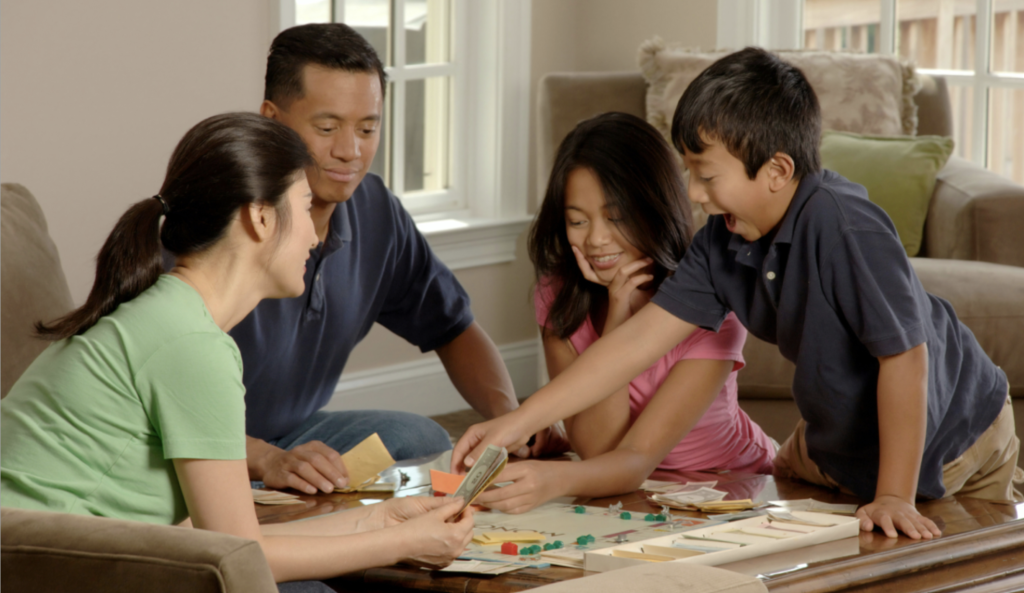
What do I mean “games for a good life”?
Real life (not The Game of Life – in itself a fun option!) gets busy. Between work, family, household responsibilities and the endless temptation to scroll, finding time for social entertainment can become a low priority. I don’t do it enough.
However, it occurred to me this week that I always feel lighter after playing games with friends. Maybe games are not just a way to kill time on a rainy day. Maybe there is something inherently more wholesome about them. We’re not sitting in silence staring at a screen, we’re learning about each other, problem solving, talking and laughing – and it’s a game, it’s silly! Even if you are a competitive player, at the end it is something you were doing just for entertainment and can walk away from, unlike other social events or responsibilities. Hidden within that, it is also a little opportunity to reconnect with yourself and the people around you.
So what actually makes a good table game for a good life?
A “good life” doesn’t have to mean constant happiness or endless productivity. I simply mean feeling connected, having things to look forward to, learning something new, enjoying small moments and leaving lighter than you arrived. I’m considering games that I feel specifically support this, rather than just what’s most popular. Games that encourage laughter, meaningful conversations, curiosity, creativity, learning and connection. Games that help you unwind, challenge your brain or unite people who might otherwise have little in common. Personally, I also think most good games fitting this criteria shouldn’t require hundreds of hours to complete, so I’ll be focusing on those that can fit around “real life” without becoming another multi-day commitment.
Here are ten games that I think offer something a little more valuable than simply passing the time…
Let the games begin!
Just One – Good for bringing people together
In Just One, a player guesses a mystery word while everyone else writes a one-word clue. The catch? Duplicate clues disappear. It’s a simple idea that creates some wonderfully chaotic moments. You’ll discover how differently or similarly your friends think, and also be challenged to communicate differently should nobody understand your clue.
You don’t need to be very competitive, strategic or particularly confident. Even if you don’t have this one with you, I’ve found a similar game can be played spontaneously with paper and pens – it really does bring people together! It’s cooperative, quick to learn and easy to play with different generations or personalities. For young families, it’s worth checking the recommended age and adapting clues for younger players.
Why it supports a good life: Shared laughter, low-pressure participation and a chance to appreciate how other minds work.
Pandemic – Good for teamwork
In Pandemic, players become disease-fighting specialists working together to prevent global outbreaks and discover cures. Rather than battling one another, you’re battling the game. Everyone wins or loses together.
You’ll need to communicate, plan ahead, share resources and sometimes compromise. It’s satisfying when a group pulls off an unlikely rescue and surprisingly funny when everything goes wrong. It’s worth noting that not every group enjoys cooperative games. Some players may prefer individual challenges and others might find the theme stressful, but I think it’s an excellent option for people who enjoy solving problems together.
Why it supports a good life: It gives teamwork a purpose and offers a fun way to practice collaborative decision-making without real-world consequences or pitching people against one another.
Codenames – Good for understanding how people think
This is a favourite in my home and we’ve even played with a 99-year-old. Any number of players can split into two teams. Cards featuring random words lay on the table. On the other face, they feature spies from each team and one deadly assassin. One player from each team sees the hidden faces and must give one–word clues helping their teammates guess which cards reveal their spies. Sound simple? Try right now to think of one word that could link moon, bank and chicken.
You begin to notice the associations people make, the references they bring into play and the different ways they interpret language. It’s also relatively inexpensive compared with many modern board games and the rules take minutes to explain.
Why it supports a good life: It celebrates different perspectives and creates opportunities for connection through curiosity, conversation and humour. Both competitive and non-competitive players can enjoy it equally.
Dorfromantik: The Board Game – Good for peaceful play
Inspired by the video game, Dorfromantik is a cooperative tile-laying game in which you build a growing landscape of villages, forests, rivers and fields. There’s no need to bluff or race against an opponent. You discuss where tiles should go, try to complete objectives and gradually create something beautiful.
It requires strategic decisions without creating a stressful atmosphere. Its gradual progression also gives you something to return to together if you’re busy or fancy a break, and it also supports solo play – basically it fits around you.
Why it supports a good life: It offers a slower, mindful activity to unwind with, creative satisfaction and a shared sense of achievement.
Sushi Go! – Good for busy people
Sushi Go! is a fast card-drafting game where you collect sushi combinations for points. Everyone chooses a card, passes their hand and repeats. Games are short, the artwork is charming and the rules are clear.
It is portable and you can fit a round into a lunch break. It’s also a good option if introducing friends to tabletop gaming. There’s enough tactical thinking to keep things interesting, without demanding an entire evening of concentration.
Why it supports a good life: It makes enjoyable shared time more achievable, even when your calendar is packed.
Wingspan – Good for learning about nature
In Wingspan, you attract birds to wildlife habitats, building an increasingly effective ecosystem. The game features real bird species and fascinating facts, turning an evening of strategy into an invitation to learn about wildlife.
Its detailed artwork and peaceful theme make it particularly appealing to players who aren’t interested in aggressive competition. It can also spark conversations about conservation as players learn how fragile, compromising and complicated the real-life-inspired ecosystems are. I’ve also become more observant when outside, spotting several of the birds this game taught me about.
It’s not the cheapest choice, so borrowing or playing in a gaming venue first is sensible. There are also expansion packs that cover more birds of Asia, Americas, Europe and Oceana, plus entirely different versions: Finspan for sea life and Wyrmspan for fantasy fans.
Why it supports a good life: It encourages curiosity about biodiversity and offers a lovely bridge between strategy, recreation, learning and appreciation of nature.
Qwirkle – Good for multi-generational play
Qwirkle uses colourful wooden tiles featuring different shapes and colours. Players build lines matching either the colour or shape and scoring points for clever placements. It’s easy to grasp, but planning ahead matters because your tile could also create a scoring opportunity for someone else.
I played this one with a friend’s extended family, and loved how different language-speakers and ages could quickly understand and get creative without being subject to complex rules or time-pressure. We also found that the scoring could easily be adapted for little’uns, without disrupting competitive game-play for the older members, so nobody was excluded.
Why it supports a good life: It creates shared rituals and lets people of different generations and nationalities enjoy a common challenge. It’s also a good one to play outside or with grubby fingers, as tiles don’t blow away and can be washed.
The Mind – Good for unusual connections
In The Mind, members must play numbered cards in ascending order without discussing their numbers. Somehow, it’s tense. You’re trying to read the rhythm of the group, judge when to act and resist the urge to explain everything. It creates an unusual kind of shared experience. One of our players got convinced he was a mind reader, but I think it was just luck!
When imagining what social game-play in “a good life” looks like, I often envisage groups discussing and bantering together. This game features a different type of communication. Some will love the suspense but others may find the silence uncomfortable. Either way, there’s plenty of laughter and explanations once the round concludes!
Why it supports a good life: It encourages patience, attention and a different kind of togetherness, where being comfortable with others doesn’t require constant conversation. Also a good game if you need to keep the noise down!
Monopoly Deal – Good for a cheap, portable game night
Love the idea of Monopoly but not the multi-hour commitment? Monopoly Deal is a comparatively quick card game that can be played anywhere. I usually keep a pack in my bag. It’s also cheaper than most board games and there are different versions for different ages and themes.
Players collect sets, charge rent and occasionally betray their nearest and dearest to obtain a card. It’s competitive rather than cooperative – like monopoly, loyalties can be formed and broken and ultimately it’s each player for themself. I’d argue that wholesome play doesn’t mean every game needs to be team-based. A little playful rivalry can be enjoyable when everyone understands it’s just a game.
Why it supports a good life: It’s an accessible, portable way to create spontaneous fun without needing a big table or a free evening. As most people are familiar with Monopoly already, it’s also very easy to grasp.
Climate Fresk – Good play for the planet
Want something that connects game night with the wider world? Climate Fresk is a collaborative, science-based game or “workshop”, built around understanding climate change. Unlike a conventional board game, this can’t just sit in your cupboard. You can play in person or online with a “workshop facilitator” who helps guide the group and give hints along the way. So it’s worth checking the facilitator availability here in advance.
Participants work together using cards to explore the relationships between climate causes and consequences. It’s designed to support learning and discussion, making it a particularly good option for community groups, friends who enjoy deep-dive conversations or organisations looking for fun educational activities. The game always draws on current climate science, including findings from the IPCC. Play takes about three hours, allowing plenty of time for facilitated discussion.
Why it supports a good life: It combines social connection with environmental understanding, helping players turn concern into informed conversation. It also means you get quality time with others and can leave a relaxed afternoon feeling more knowledgeable and purposeful about the planet. You can sign up as a group or as an individual, which is a great way to meet other people.
How games support a good life and how to find “your people”
Table games offer more than entertainment. They create a reason to gather, something to talk about and an activity that doesn’t revolve around spending money on a night out. If you’re lonely, shy, busy, short on money or living in a tiny flat, don’t assume gaming isn’t for you.
Try a local board-game club, library event or board-game café. Regular groups can make meeting people easier because you have a shared activity, rather than the pressure of making conversation from scratch. My friend joined a weekly board game club shortly after relocating cities, and met a great group of new friends that way. Clubs and venues are also a good way to try new board games before you buy them. One board game cafe near me charges £5 per head for a whole night of gaming, with endless choice from their library. They also serve drinks and food to your table. There’s something for everyone, without the hassle of hosting.
If you prefer hosting, keep it simple: one game, a few snacks and a short evening. Or ask everyone to bring a game – you don’t need a huge collection! Swap games with friends, explore charity shops, look for second-hand copies online, or borrow before buying. (This is also good for the environment.) If in doubt, a standard deck of playing cards can provide hours of fun. Keep it light, don’t worry about being good at it, and let yourself enjoy the experience.
If meeting in person isn’t practical, online platforms and digital board-game adaptations let you play with live opponents or friends remotely. They’re convenient, particularly for long-distance friendships, but be sure to protect time for sleep, movement and offline relationships too. Remember, the goal is to improve our quality of life!
By incorporating a little play into your day, you might just discover that one of life’s good investments is simply time spent together. Happy playing!