It’s the classic question any vegetarian knows well: how do you get your protein?! But this is something we should all be asking ourselves, now more urgently than ever.
Before we go any further, let’s get on the same page. This article is simply exploring why we should seek protein options that are both sustainable and healthy, and understanding the various options available to us. As important as they are, we do not have space here to cover issues of animal welfare, world hunger or food packaging, nor am I pushing vegetarianism or any particular product. I’m not an expert and this is a summary of research I’ve done on my own.
To set the scene, here are three global issues currently being faced, which are leading people to seek wider protein options. Firstly, humanity’s overconsumption of meat, particularly in high- and middle-income nations, has reached levels that are damaging to human health and the planet. Secondly, global meat prices reached record highs in late 2025 and early 2026, driven by a 10% increase in the FAO Meat Price Index. Lastly, approximately 570 million people worldwide are estimated to have insufficient protein intake, a crucial component of global malnutrition, with a further 122 million expected by 2050.
Overconsumption of meat
Let’s take a look at the first one. Overconsumption of meat is a proven contributing cause behind significant health problems such as heart disease, bowel cancer and type 2 diabetes, among others. Of course, the average human body can process and benefit from some meat – most cultures have been eating it for centuries. However, it is not equipped to handle the amount that those of us in higher-income countries are usually indulging. This is even more important when considering that a lot of modern meat is heavily processed and diluted or the animals fed with steroids which are harmful to humans when consumed in the amounts we do. Doctors generally recommend limiting red and processed meat to no more than 350–500g (cooked weight) per week – roughly 3 portions – to reduce risks of health problems. The recommended approach encourages people to opt for lean and unprocessed meat, preferring poultry and fish, and integrate these with a greater ratio of plant-based proteins to create a balanced diet.
On the other side of the overconsumption coin, we’ve learned that the current levels are also causing severe environmental damage. The meat industry is a massive contributor to climate change, with issues spanning pollution, deforestation and high water usage. The global livestock herd consumes 83% of global farmland (30% of the Earth’s land surface) while providing only 18% of the world’s calorie supply. Livestock farming alone contributes 56% of food-sector greenhouse gas (GHG) emissions and 18% of global GHG emissions. As humanity’s demand for meat continues outpacing planet supply, the race to create more grazing land and feed crops is also driving deforestation and species extinction. From a resource point-of-view, it’s a highly inefficient product. For example, producing just one kilogram of beef requires approximately 15,000 liters of water and 25 kilograms of grain. In a simplified picture, farmers must obtain land and water to grow the grain, as well as land and water to raise the livestock that eat it, before a true profit is made. It would be more efficient for humans to eat the grain and drink the water. Grain also transports easier and can be used to feed a wider range of nations. This is a faster, cheaper and more environmentally-friendly and sustainable play for all parties concerned, which even many farming unions have acknowledged. A 2023 report indicated that high-income countries need to reduce meat consumption by up to 82% to prevent environmental collapse. In fact, cattle herds in the UK, Europe and the US have already been falling by roughly 3% annually, despite their best efforts. Quite frankly, the planet cannot continue providing the same amount of meat, and supply will continue falling short of demand unless demand decreases. It seems the only people not promoting lower meat consumption are the shops selling it – and possibly your grandparents, who recall a time when meat was scarce and valuable (and probably more organic). This leads us nicely on to the second issue…
Increasing meat prices
Skyrocketting global meat prices mean it is no longer the sustainable meal option that it was just 10 years ago. Gone are the days of your local butcher, who dealt with whole, usually-local animals and sold different cuts for different prices – something for every household, with nothing wasted. In swept the supermarkets which generated impossibly high global demand (but only for certain, expensive cuts – creating more food waste and less-balanced diets) and worsening environmental practices to maintain them. This brought in steep demand issues years ago, but the trickle-down costs from global supply issues have taken longer to reach consumers in high-income nations. Many of these supply issues are worsening every year. Climate change and extreme weather is ruining grazing pastures, forcing early, expensive feeding for livestock and reducing herds, particularly in the US and Europe. Simultaneously, higher energy prices, labor shortages and steep animal feed costs have increased the expense of rearing, slaughtering and transporting livestock. Disease outbreaks have taken a toll too, with avian flu severely impacting poultry, several diseases affecting cattle and even COVID-19 creating a few lingering global supply chain issues – all leading to lower and more expensive supply. Several countries are also experiencing high inflation, so those farmers are not being financially supported through these challenges and must pass the costs to consumers. Rebuilding global livestock herds is expected to take years and it will take even more time for that recovery to reach consumers – suggesting high meat prices may persist for the foreseeable future. As a result, fewer households can afford to eat meat regularly and more people are seeking alternative protein options.
Insufficient protein intake
We all want to eat healthy, do our bit for the environment and budget wisely, so cutting down on meat sounds like a simple way to solve all these issues, right?! But changing your eating habits shouldn’t be done lightly. (Enter “consult your doctor” disclaimer here). As we learned at the start of the article, health studies show that people in the majority of high-income countries consume far too much meat protein, but if you reduce your meat intake, do you consume enough other protein? Human beings require about 20–30% of their daily calories to be protein in order to function normally. It is used to build and repair tissues, maintain existing muscle mass, support immune health and aid weight management by increasing satiety. It is particularly crucial for adults aged 50+ to counteract age-related muscle loss. The majority of protein-deficient people in the world live in lower-income countries, especially in sub-Saharan Africa and South Asia where few types of protein are readily available – but that figure is rising globally. Those advised to follow a high-protein diet, are usually either not regularly hitting that percentage or have a lifestyle requiring them to raise it. Commonly this includes athletes, people with injuries or chronic illnesses, those aged over 50, pregnant people, or the one-in-three adults world-wide with low iron levels. Being encouraged (or financially forced) to reduce eating meat, but told to keep protein high, is a challenge – so here is a quick breakdown of some accessible (in high-income countries) protein types and their environmental and health impacts.
Protein options: sustainable vs healthy
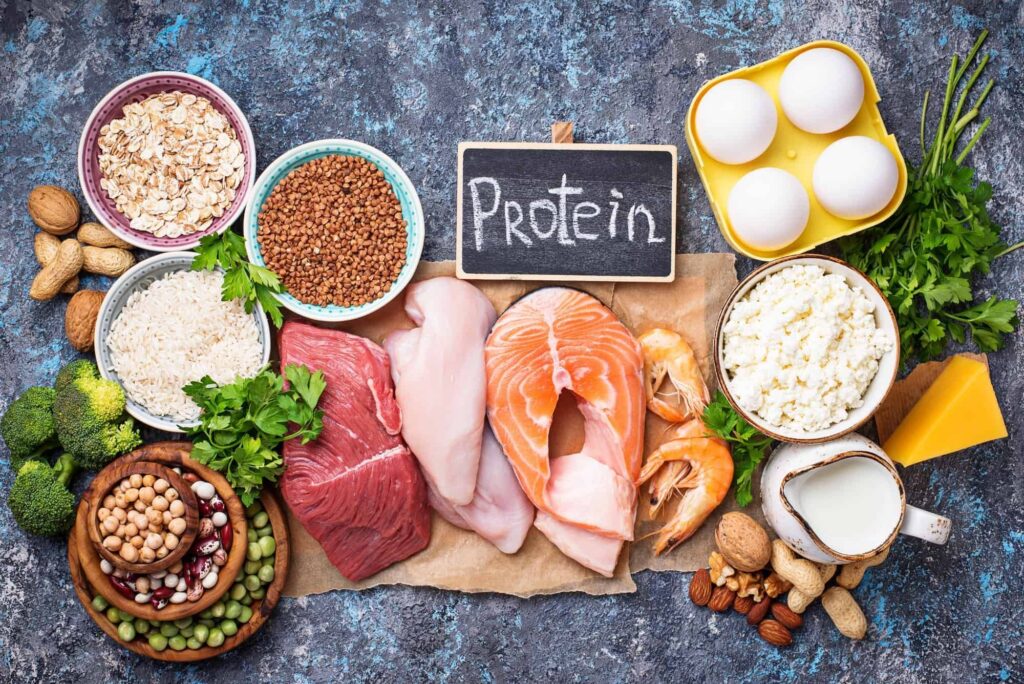
Legumes (such as beans, lentils and peas) are generally considered the most environmentally-friendly protein sources, requiring minimal land, water and energy while often improving soil health. They produce significantly fewer greenhouse gases than meat, with peas emitting roughly 90 times less CO2 than beef. Most legumes are also nitrogen-fixing, reducing the need for fertilizers. Other plant-based options include soy (such as tofu or tempeh) which has a low environmental impact but certain farms have been linked to deforestation – largely due to high demand from meat farmers as 80% of global soy harvests are used as livestock feed. Legumes and soy are high in fiber and rich in vitamins and essential amino acids, but excessive consumption can cause bloating. Soy also has high estrogen levels which concerns some people (but there’s no major scientific backing of negative impacts from this). Other options are nuts and seeds, such as hemp, pumpkin and chia. These have a very low carbon footprint – with some, like hemp, absorbing more CO2 than is emitted during production. They are also high-fiber and many are high fat so should ideally be eaten in small quantities. Mycoprotein and algae, including spirulina, Quorn and fungi, are highly sustainable, resource-efficient and fast-growing. These are low in fat, rich in omega-3 and can often be cooked as a direct substitute for meat. Seitan (wheat gluten) is also another highly protein-dense, low-carbon alternative that can be a direct substitute. However, it contains gluten and lacks amino acids. A quick note on milk substitutes: it is worth looking into how your favourites are made as they all have varying environmental impacts. For example, almond milk, despite being low-carbon, is water-intensive and often produced in water-stressed areas like California, while pea protein milk produces few emissions and requires 86% less water than dairy, while still offering high protein content.
While plant-based proteins are consistently more sustainable than any animal-based alternatives, animal products can also be included to create a balanced diet. Eggs have the lowest environmental impact of any animal protein, with emissions nearly six times less than beef. Of the meats, poultry such as chicken and turkey have a somewhat low environment impact as are one of the most efficient animal proteins in terms of carbon footprint. Pork has a moderate impact but is significantly lower than beef or lamb as pigs do not produce large amounts of methane. Cheese and dairy has a substantial footprint, generally higher than pork or poultry. Seafood varies heavily, but most fish generally produce lower greenhouse gas emissions than red meat (though farmed fish can have extremely high environmental footprints). Smaller breeds of fish are typically more sustainable than larger ones. Sheep have a high impact, close to beef, which is driven by methane production and grazing land requirements. Beef has the highest impact, producing massive methane emissions (ruminant digestion) and requiring vast land, feed and water resources. The easiest animal-products to digest are Greek yogurt, kefir, eggs, white fish, lean poultry and bone broth, with dairy and eggs having nearly 97% digestibility. Pork and red meats are harder to digest and are higher in fat and calories.
Protein is not often easily absorbed by the body and if you introduce any new protein type to your diet it may cause some bloating or discomfort as you adjust, so introduce them gradually. Typically, seitan and peas have the highest protein levels (79g), while tofu, edamame, sunflower seeds and lupini beans are among many other plants with protein levels above meats (40-60g). Then the animal products enter the game, with gamalost (54g) and parmesan cheeses (39g) joining the list first, followed by chicken and lean game meats (such as deer, 31-36g), then mutton (aged sheep, 30g), followed by turkey, most fish, lamb and eggs (27g), then lean beef (26g), hard cheeses (24-27g), pork (24g) and finally most other dairy (3-24g). These figures can vary depending on cut or brand.
We’ve covered a lot of info here. Were you, like me, surprised by any of it? I’m sure the findings don’t stop here, and I’d strongly encourage you to continue doing your own research as well. Until then, I hope some of this has helped expand your knowledge of the protein world just as it did mine! At the end of the day, we don’t all have to be bodybuilders or vegetarians to start caring about how we get our protein. Bon appétit!